
 9 Minutes


Key Takeaways
- Whether it’s travel or family activities, consumers are seeking experiences that create connection, memories, and a sense of fulfillment.
- Consumers are still willing to spend on the things that matter most, but they’re being more intentional about how they spend. Comparison shopping, planning ahead, and looking for the best overall value are standard behaviors.
- Brands that help people create memorable experiences, simplify decisions, and feel confident in their choices will be best positioned to earn attention and loyalty.
In this Article
- This Year, Summer Is About Experiences, Not Transactions
- What American and Canadian Parents are Prioritizing
- Higher-Income Households Continue to Invest in Experiences
- Summer Spending Remains Strong, But Consumers Are More Selective
- Value-Seeking Has Become a Core Consumer Behavior
- Students Reflect Different Priorities Across Markets
- The Dominant Emotional Theme Is « Making Summer Count »
- Strategic Takeaways for Marketers & Insights Teams
- Final Thoughts
Need fast, reliable data to guide your next decision?
Summer has always been a season of possibility, but in 2026, consumers are approaching it with a different mindset. Rather than packing every weekend with activities or splurging on bucket-list experiences, people are becoming more intentional about how they spend their time, energy, and money.
We surveyed over 1000 respondents across the US and Canada. Here’s a glimpse of what we discovered: consumers are prioritizing travel, family connection, and meaningful experiences, but they’re doing so through a lens of value and practicality. Americans are gravitating toward domestic travel and close-to-home adventures, while Canadians are showing a greater appetite for international travel.
Parents are actively planning ways to keep children engaged throughout the summer, students are balancing travel, work, and personal growth, and households across income levels are carefully weighing where to spend and where to save.
At the same time, spending remains surprisingly resilient. Consumers are becoming more selective as they compare options, look for deals, and prioritize experiences that matter most. More importantly, they’re seeking confidence that every dollar spent will feel worthwhile.
What does this mean for marketers? It means that the winning brands this summer are the ones that help consumers create meaningful moments and deliver experiences that feel worth the investment.
This Year, Summer Is About Experiences, Not Transactions
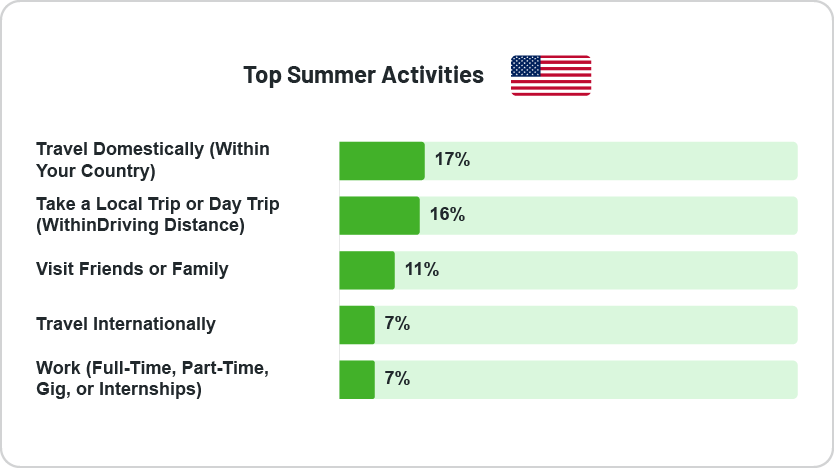
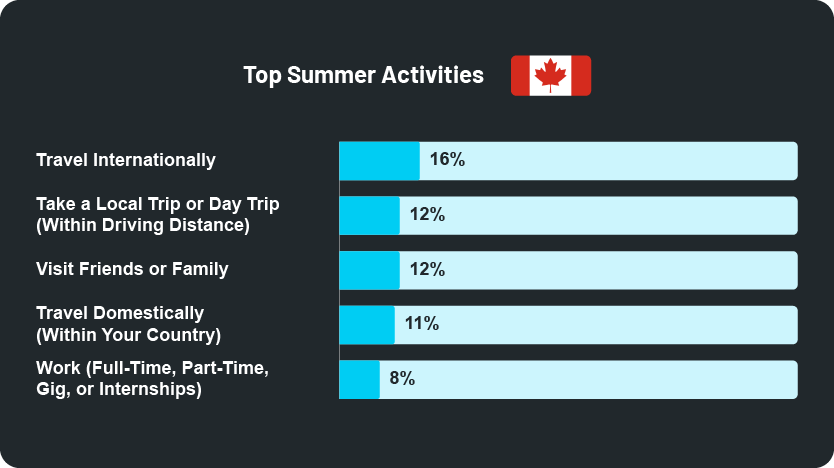
The one thing that really stands out in this year’s data is that consumers are looking for experiences that will turn into special memories. This is seen with the rise of « emotion economy“ the idea that people are increasingly investing in experiences that strengthen relationships and helps them feel connected.
And that’s exactly what we see in the summer plans consumers are making.
Consumers in both markets are prioritizing travel, family connection, and shared experiences. In the US, domestic travel (17%) and local day trips (16%) lead summer activity plans, while international travel sits at just 7%. Canadians show a different pattern, with international travel ranking highest at 16%, followed by local trips and visits with friends and family (12% each).
What This Means
- Consumers are seeking:
- Connection over consumption
- Experiences over possessions
- Memories over busyness
- Accessible adventures over once-in-a-lifetime splurges
For marketers, positioning products as enablers of memorable experiences can be more effective than emphasizing product features alone.
Brand Opportunity
Instead of asking:
« Why buy this? »
Ask:
« How does this help consumers make the most of summer? »
Family-Centered Planning Drives Parent Behavior
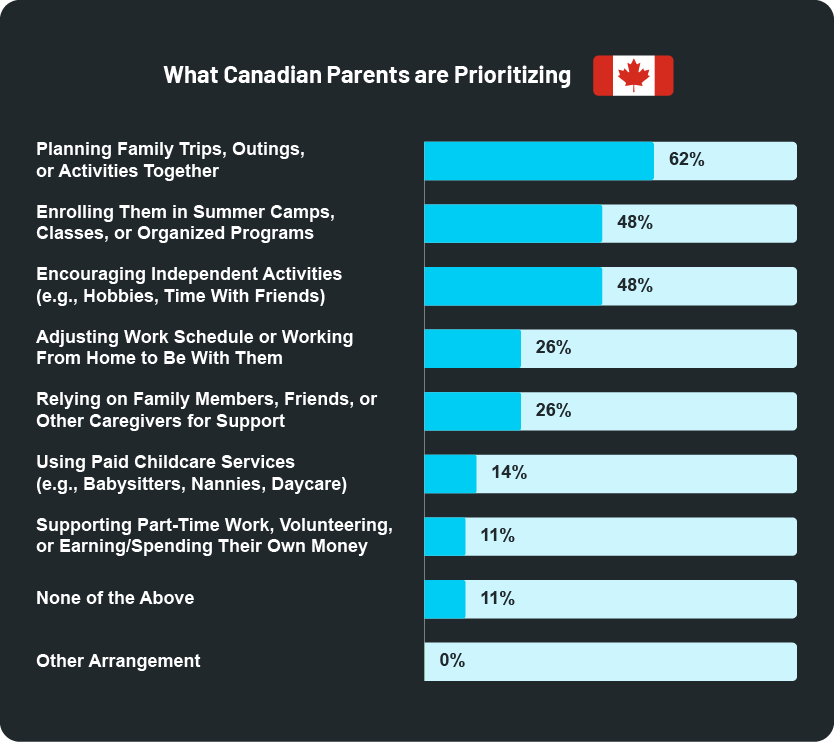
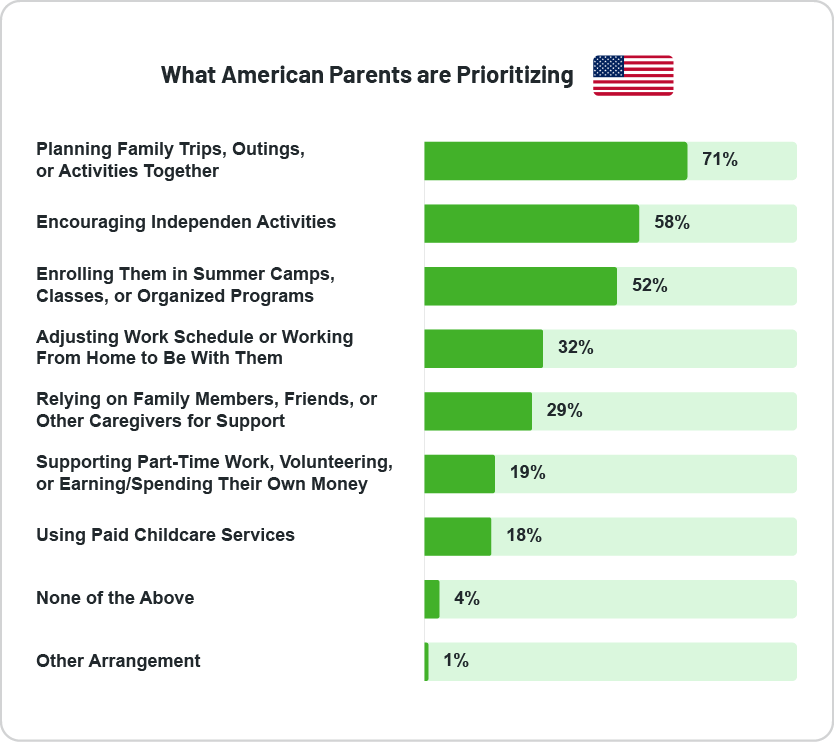
Parents are among the most active planners this summer.
Among US parents:
- 71% are planning family trips or activities
- 58% encourage independent activities
- 52% are enrolling children in camps or organized programs
Among Canadian parents:
- 62% are planning family activities
- 48% are using camps/programs
- 48% encourage independent activities
Parents are actively managing their children’s summers rather than leaving activities unstructured.
What This Means
The summer parent is acting as:
- Planner
- Budget manager
- Experience curator
- Household coordinator
Brand Opportunity
Brands targeting families should emphasize convenience, planning support, flexibility, and value rather than just entertainment. Products and services that help parents:
- Keep children engaged
- Create family memories
- Simplify summer logistics
Higher-Income Households Continue to Invest in Experiences
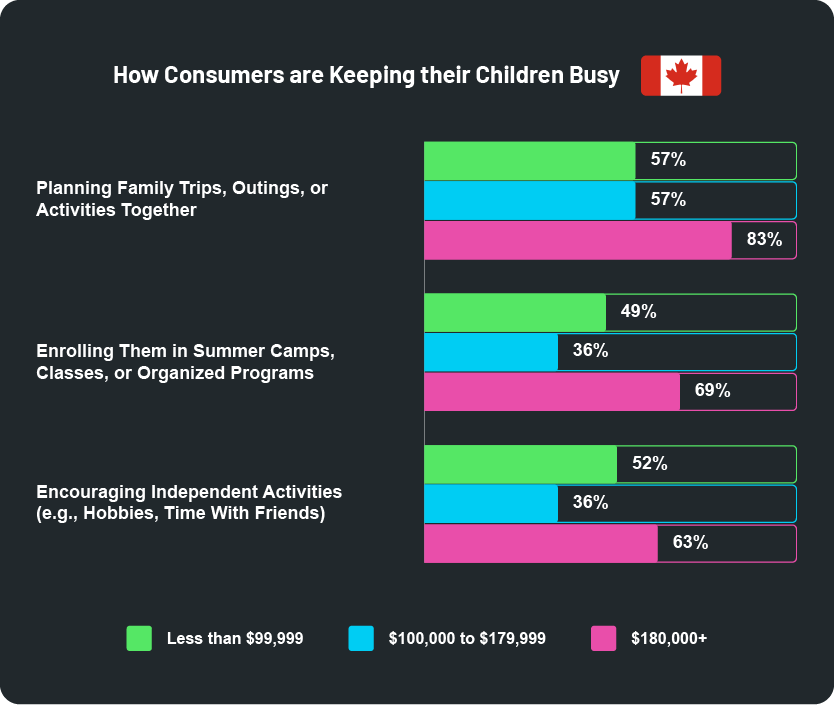
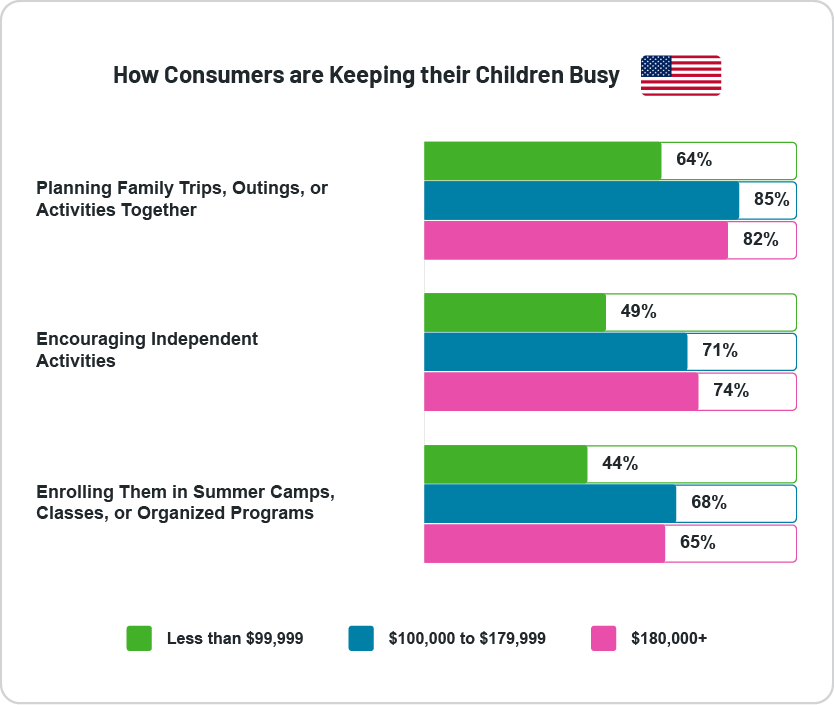
Income remains a strong differentiator in summer participation.
Higher-income households in both countries are significantly more likely to:
- Travel
- Enroll children in campus
- Participate in organized activities
Among US parents earning $100K+, camp participation reaches roughly two-thirds of households compared with 44% among lower-income households. Canadian households earning $180K+ show similar patterns.
What This Means
Affluent consumers are not pulling back—they’re prioritizing premium experiences.
Brand Opportunity
For premium brands:
- Keep children engaged
- Create family memories
- Simplify summer logistics
For mass-market brands:
- Emphasize affordability without sacrificing experience quality.
Summer Spending Remains Strong, But Consumers Are More Selective
Americans expect to spend approximately $3,000 USD on summer activities and travel, while Canadians expect to spend approximately $2,200 CAD.
Additionally:
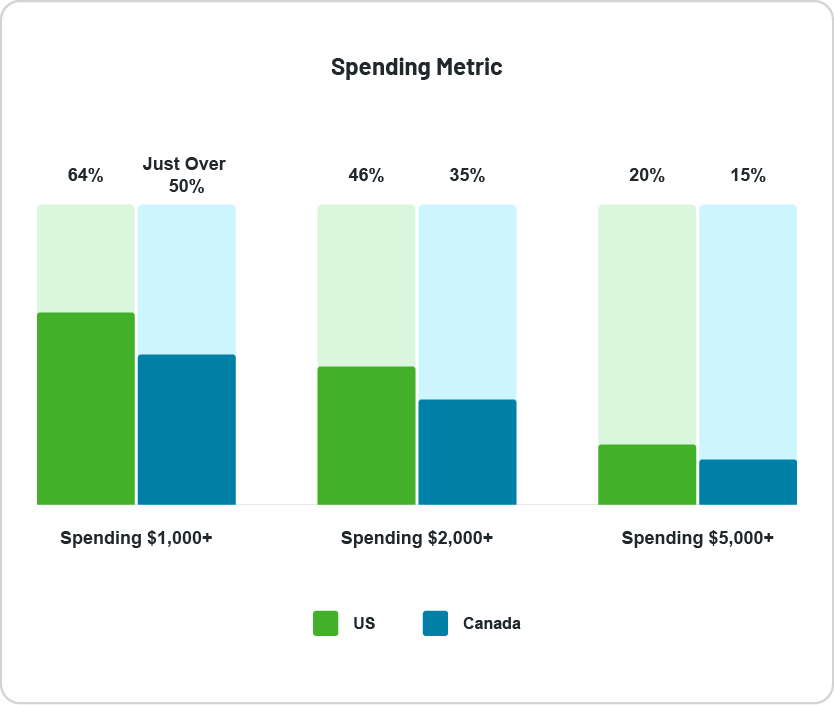
However, consumers aren’t spending blindly. Most are carefully evaluating where their money goes.
What This Means
Consumer confidence hasn’t disappeared.
Instead:
- Consumers want proof of value.
- Every purchase must justify itself.
Brand Opportunity
Shift messaging from:
« Best price »
to
« Best value »
Consumers want reassurance that experiences and purchases are worth the investment.
Value-Seeking Has Become a Core Consumer Behavior
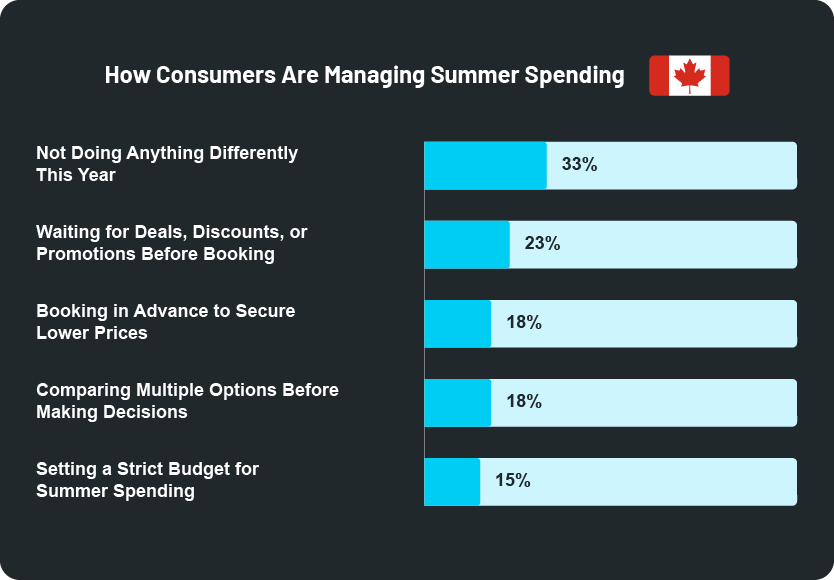
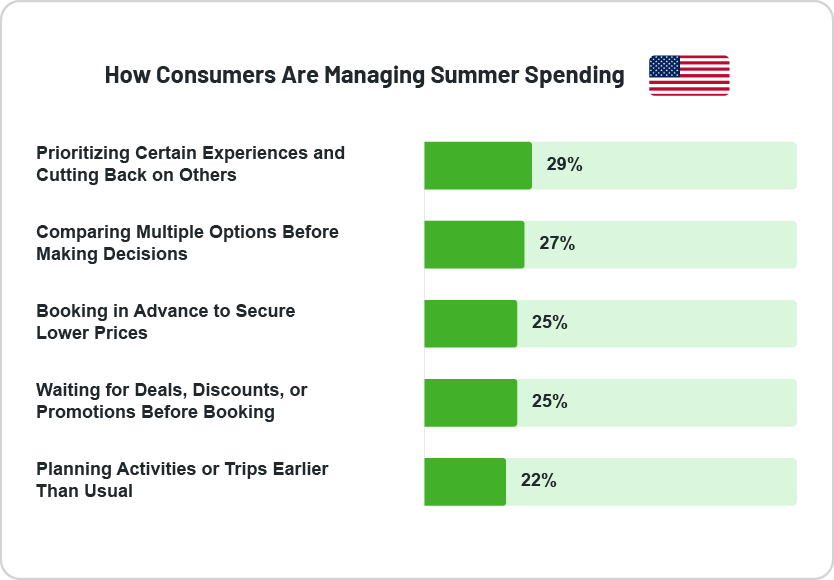
Across both markets, consumers are actively managing costs.
Leading strategies include:
US:
- Prioritizing certain experiences while cutting others (29%)
- Comparing options (27%)
- Booking in advance (25%)
- Waiting for deals (25%)
Canada:
- Waiting for deals
- Booking in advance
- Comparing options
- Maintaining budget discipline
Flexibility remains important in both markets, with only 4% of Canadian consumers and 7% of American consumers choosing non-refundable or limited-flexibility options to save money.
What This Means
Consumers are optimizing their spending.
Value-seeking is no longer reactive behavior during economic uncertainty; it has become standard practice.
Brand Opportunity
Brands should support planning behavior through:
- Bundles
- Early booking incentives
- Loyalty rewards
- Price transparency
- Flexible purchasing options
Students Reflect Different Priorities Across Markets
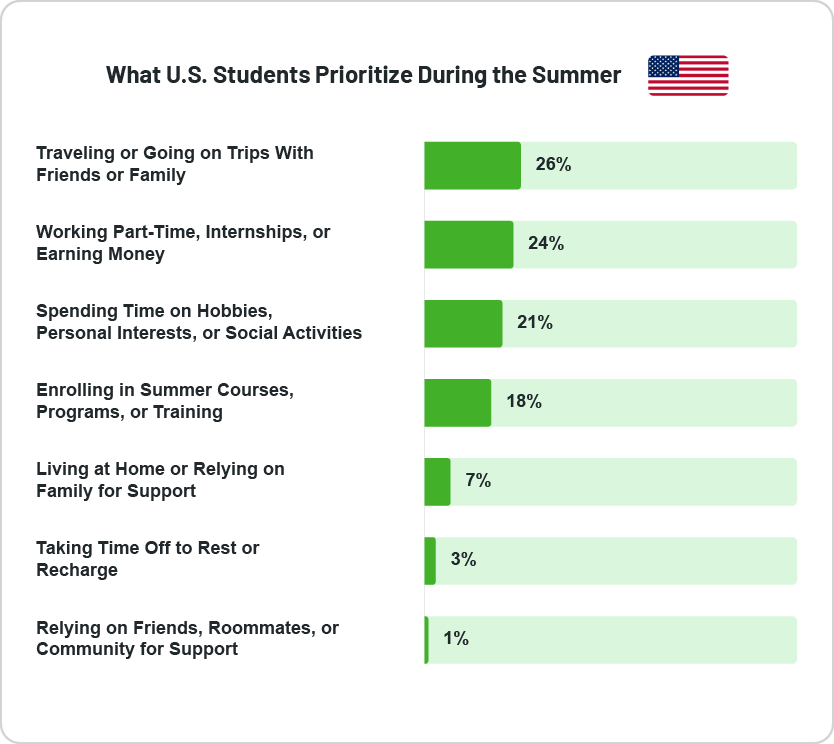
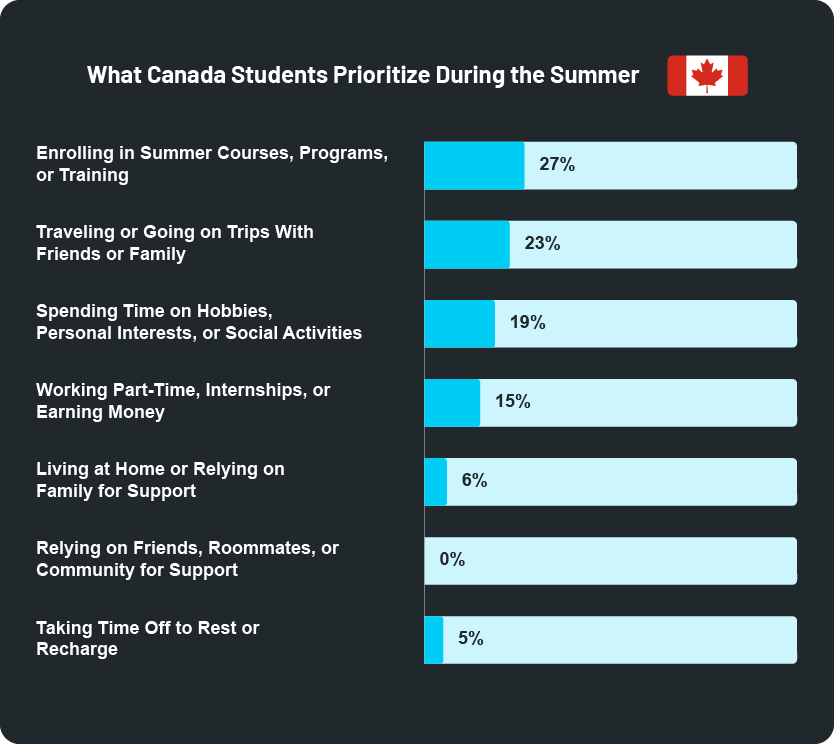
US students are prioritizing:
- Travel (26%)
- Work and earning money (24%)
- Hobbies and interests (21%)
Canadian students are prioritizing:
- Summer courses and training (27%)
- Travel (23%)
- Hobbies and interests (19%)
What This Means
Canadian students appear more focused on skill development and future preparation.
American students are balancing travel and income generation.
Brand Opportunity
Brands targeting Gen Z should recognize these motivational differences:
- US messaging can focus on freedom, earning, and experiences.
- Canadian messaging can emphasize growth, learning, and personal development.
The Dominant Emotional Theme Is « Making Summer Count »
Perhaps the most important finding is the emotional mindset behind summer planning.
Top sentiments include:
US:
- 33% want to slow down and enjoy the little moments
- 21% want summer to feel memorable, not just busy
Canada:
- 27% want to slow down and enjoy the little moments
- 20% feel summer goes by before they make the most of it
- 19% believe the best parts of summer are simple moments
What This Means
Consumers aren’t chasing more activities. They’re chasing:
- Meaning
- Presence
- Connection
- Memory-making
This is a powerful emotional territory for brands.
Brand Opportunity
The strongest narratives this summer will focus on:
- Togetherness
- Simplicity
- Memory-making
- Enjoying the moment
- Making spending feel worthwhile
Strategic Takeaways for Marketers & Insights Teams
1. Position Around Emotional Experiences, Not Products
Consumers are evaluating purchases based on the experiences they enable, not product features alone.
Action: Show the outcome of owning your product instead of highlighting your service/tool’s features.
2. Lead With Value, Not Discounting
People are willing to spend, but they need confidence that spending is worthwhile.
Action: Demonstrate value through quality, convenience, access, or memory-making potential.
3. Family Audiences Need Planning Solutions
Parents are highly engaged planners juggling activities, childcare, budgets, and family experiences.
Action: Simplify decision-making and reduce friction.
4. Embrace the « Slow Summer » Mindset
Consumers increasingly want meaningful moments over packed schedules.
Action: Build campaigns around authenticity, connection, and enjoying the present rather than maximizing activity.
5. Help Consumers Feel Smart About Spending
Comparison shopping, booking ahead, and deal-seeking are mainstream behaviors.
Action: Provide planning tools, recommendations, bundles, and transparent pricing structures.
Final Thoughts
If there’s one theme that emerges from this research, it’s that consumers are redefining what a successful summer looks like. Bigger isn’t necessarily better and more activities don’t automatically mean more fulfilment. Instead, people are looking for experiences that feel meaningful, memorable, and worth the time and money they invest.
This mindset is influencing everything from travel plans and childcare decisions to spending habits and emotional expectations. Consumers are carefully curating their summers and seeking out opportunities to connect with family and friends, make lasting memories, and enjoy the simple moments that often matter most. At the same time, they remain highly value-conscious, balancing aspirations with practical realities.
For brands and insight leaders, the implications are clear: focus less on selling products and more on enabling emotional experiences. Demonstrate value, simplify decision-making, and position your brand as a partner in helping consumers make the most of the season. The brands that successfully tap into the desire for connection, meaning, and worthwhile experiences will be best positioned to earn both attention and loyalty this summer.
The biggest opportunity this summer lies in helping consumers slow down and make more meaningful memories.


![[OnDemand] How to Optimize Product Testing with Sago](https://sago.com/wp-content/uploads/2026/03/opARCIUl5EDvSGkjZA6NtsiLLXeNxBruzoAMZZNf.png)

![[OnDemand] Promotions + AI: Lift Sales Without Losing Your Brand](https://sago.com/wp-content/uploads/2026/06/blake-wisz-tE6th1h6Bfk-unsplash-scaled.jpg)

![[OnDemand] Why You Should Develop a Data Quality Tech Stack](https://sago.com/wp-content/uploads/2022/09/Single-Sign-On-Methodify.jpg)